When designing recreational destinations, our goal is not simply to place buildings on a site. First and foremost, we analyze who the complex is intended for and what type of experience will become the foundation of the project.
This recreational base in the village of Khreshchatyk, Cherkasy region, is located at the confluence of the Ros and Dnipro rivers — one of the most well-known fishing destinations in central Ukraine. For this reason, the primary audience of the complex is anglers who come here not for a wide range of entertainment, but for the opportunity to spend several days on the water.
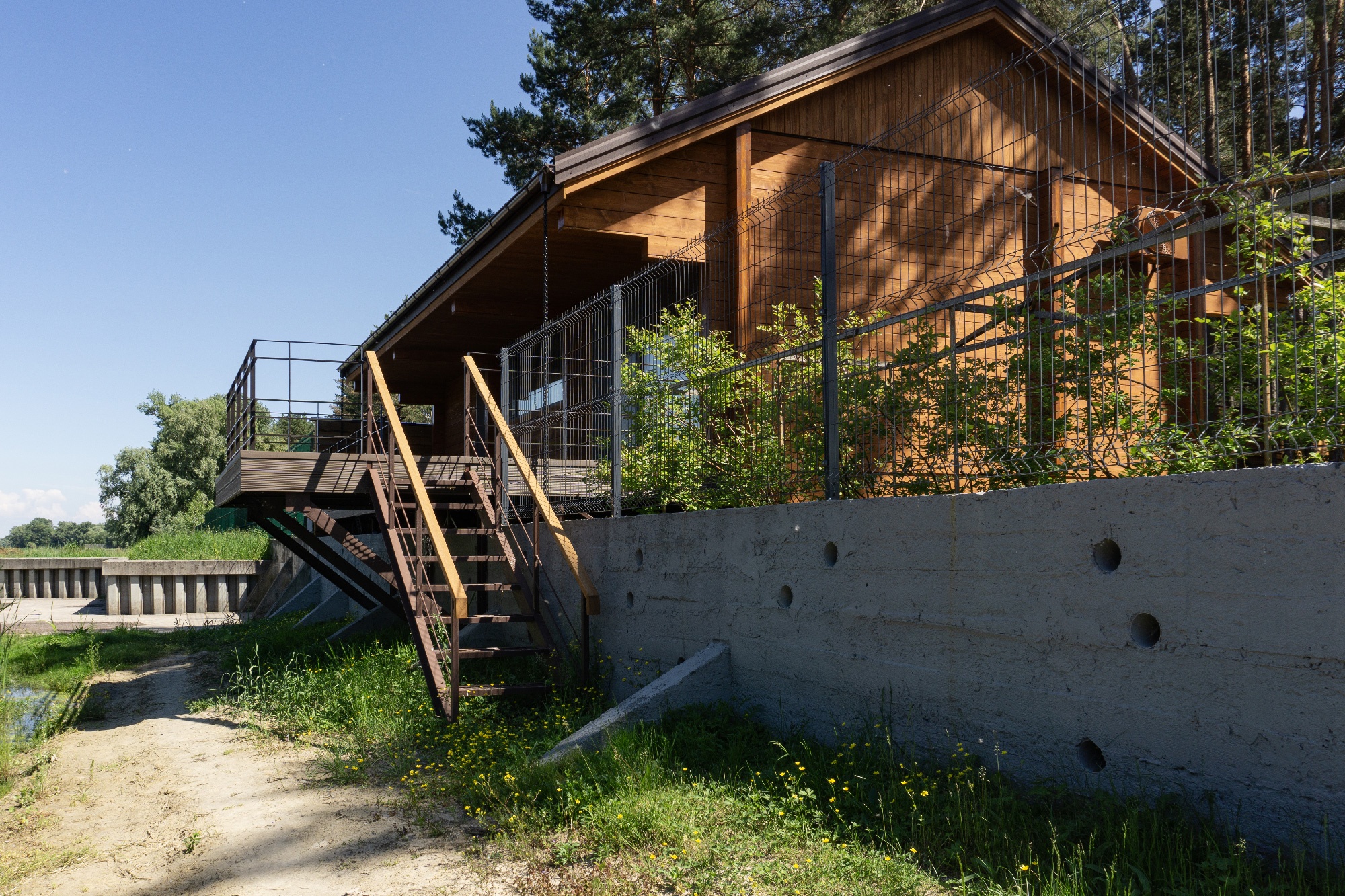
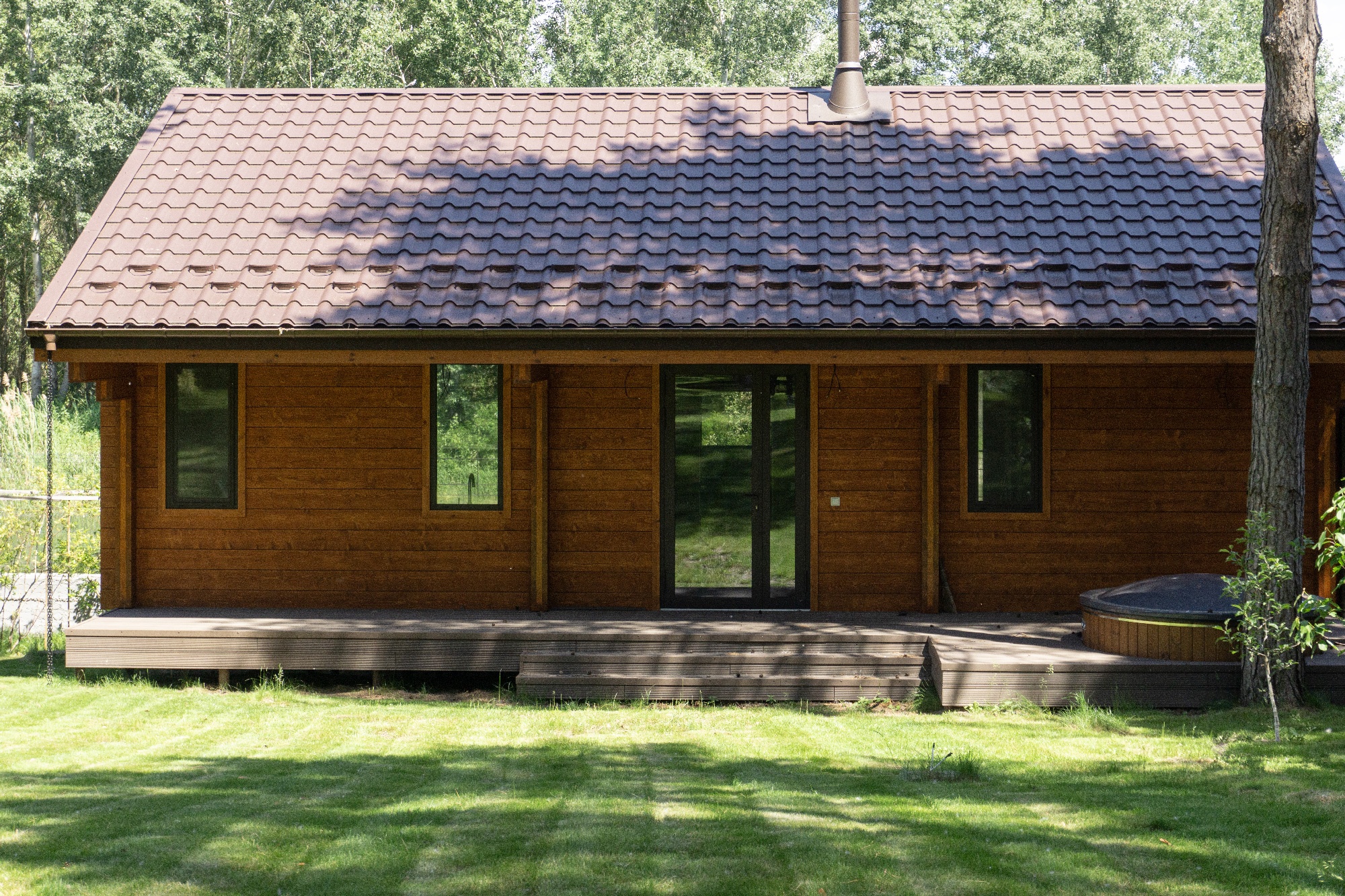
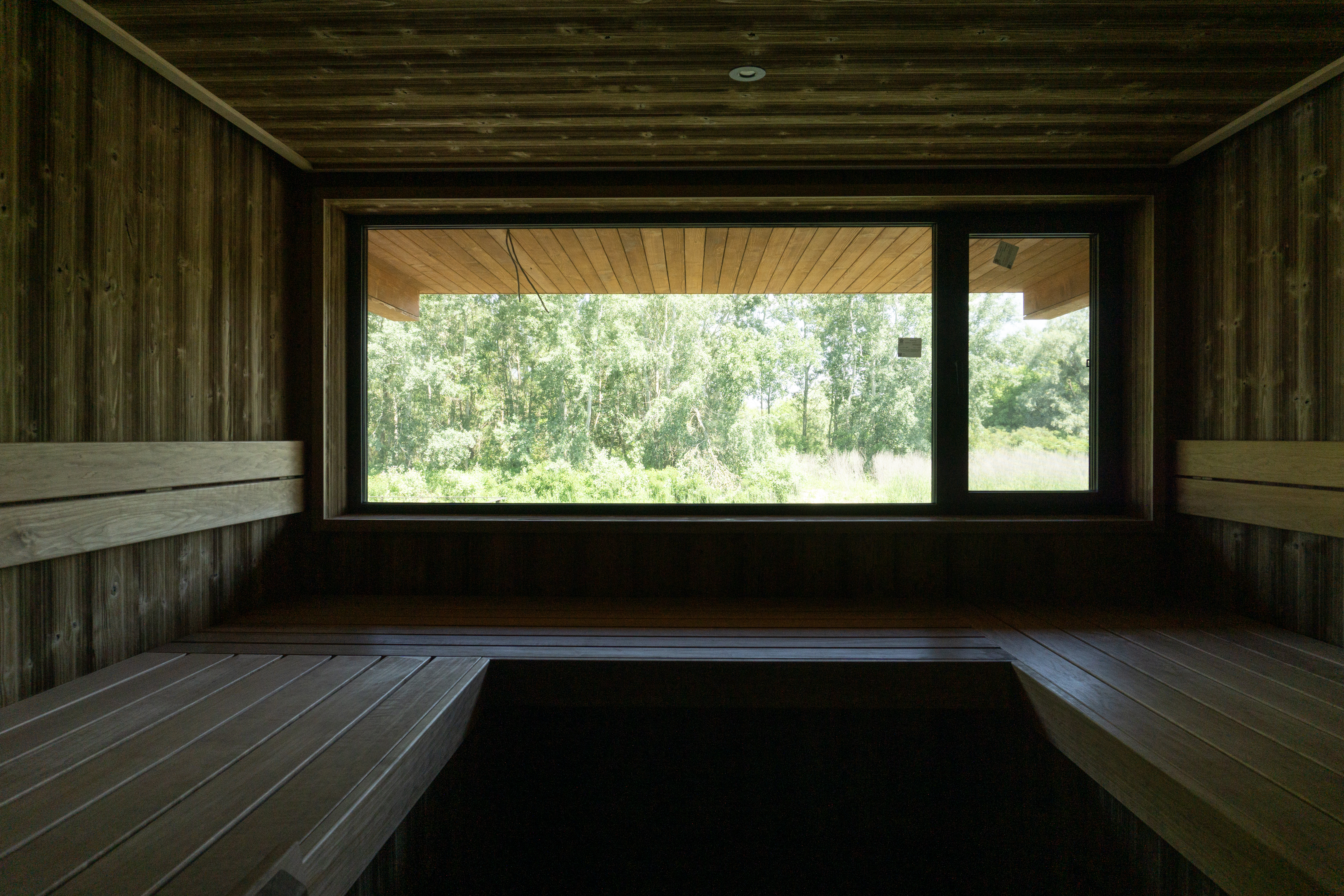
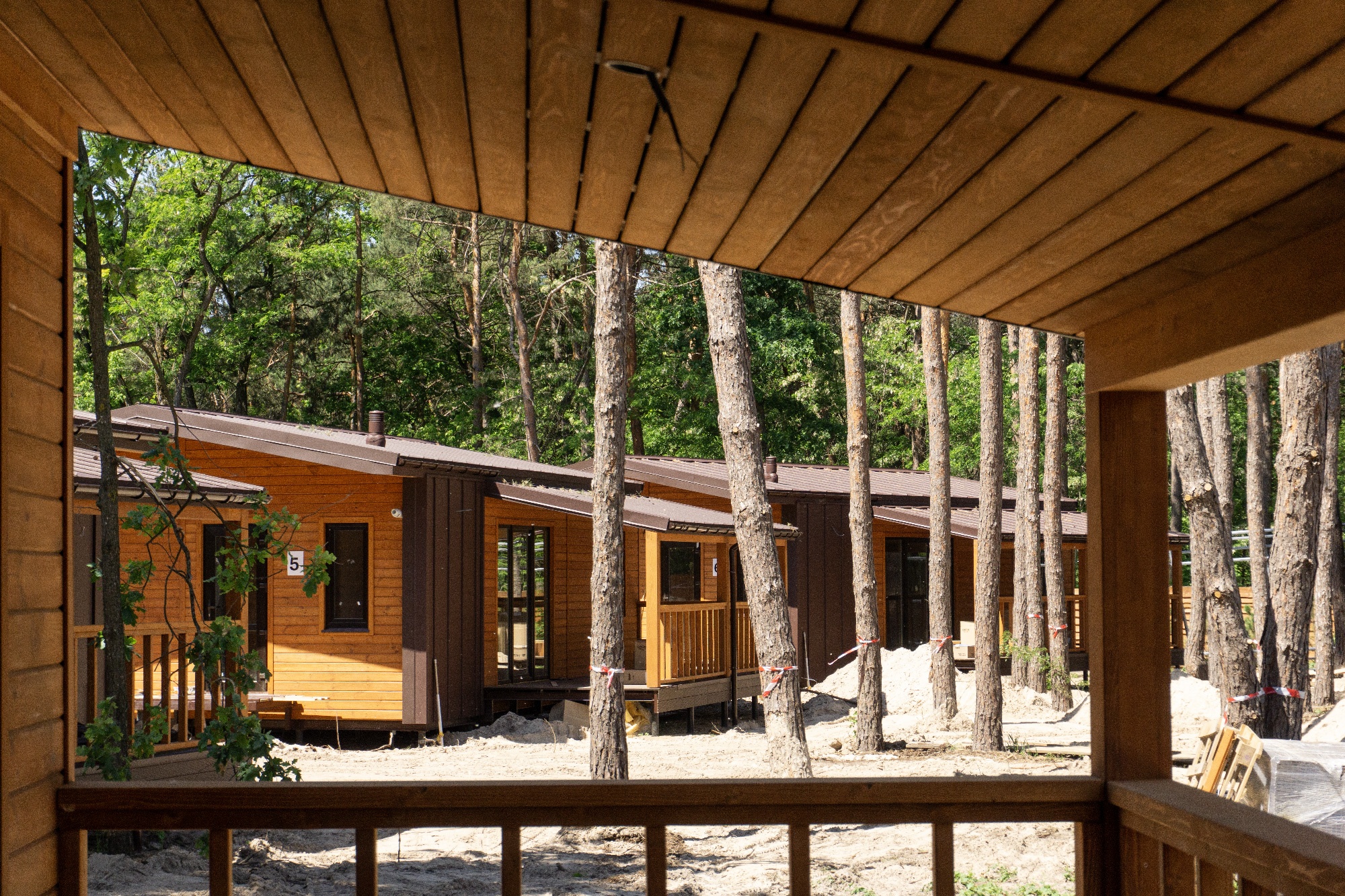
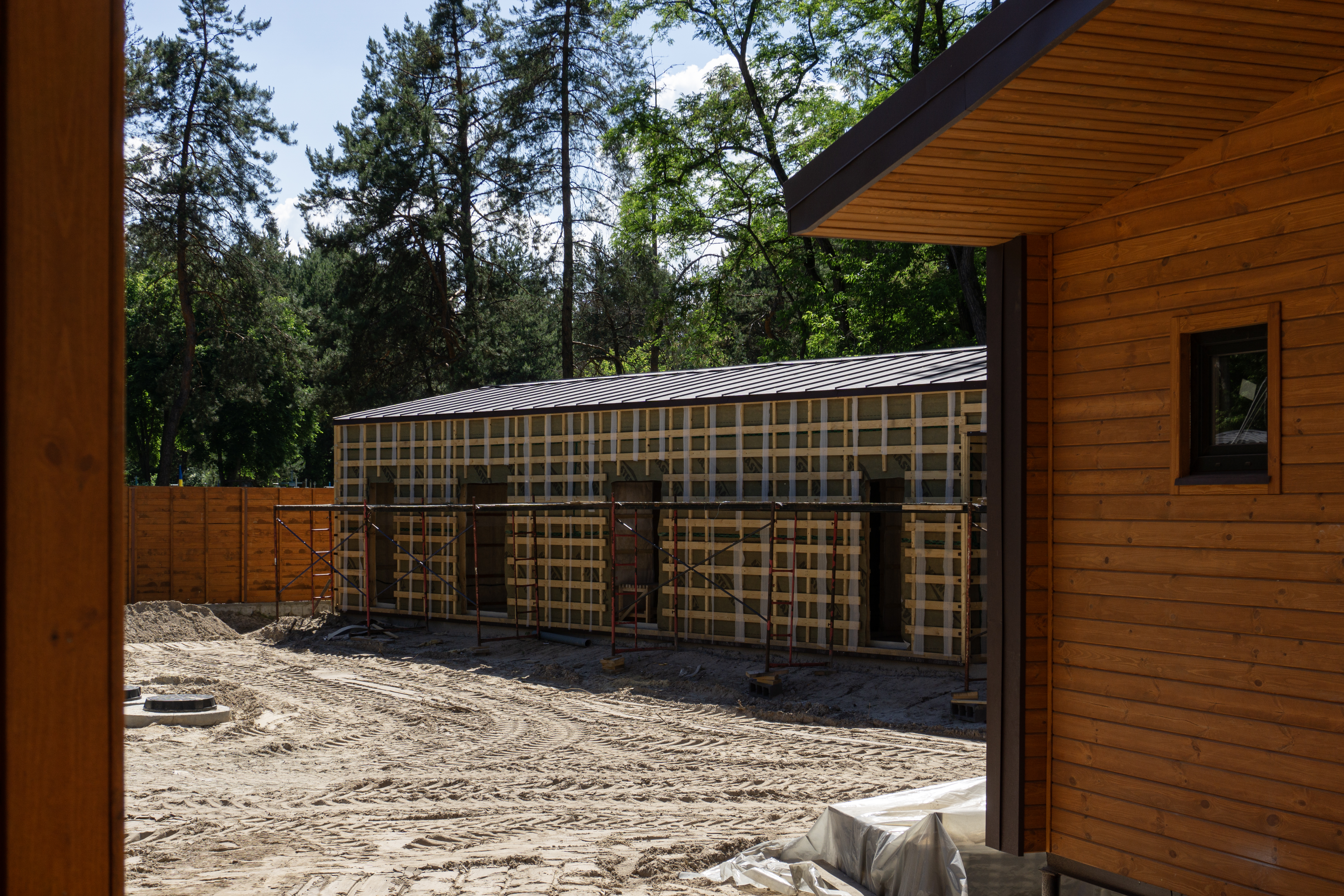
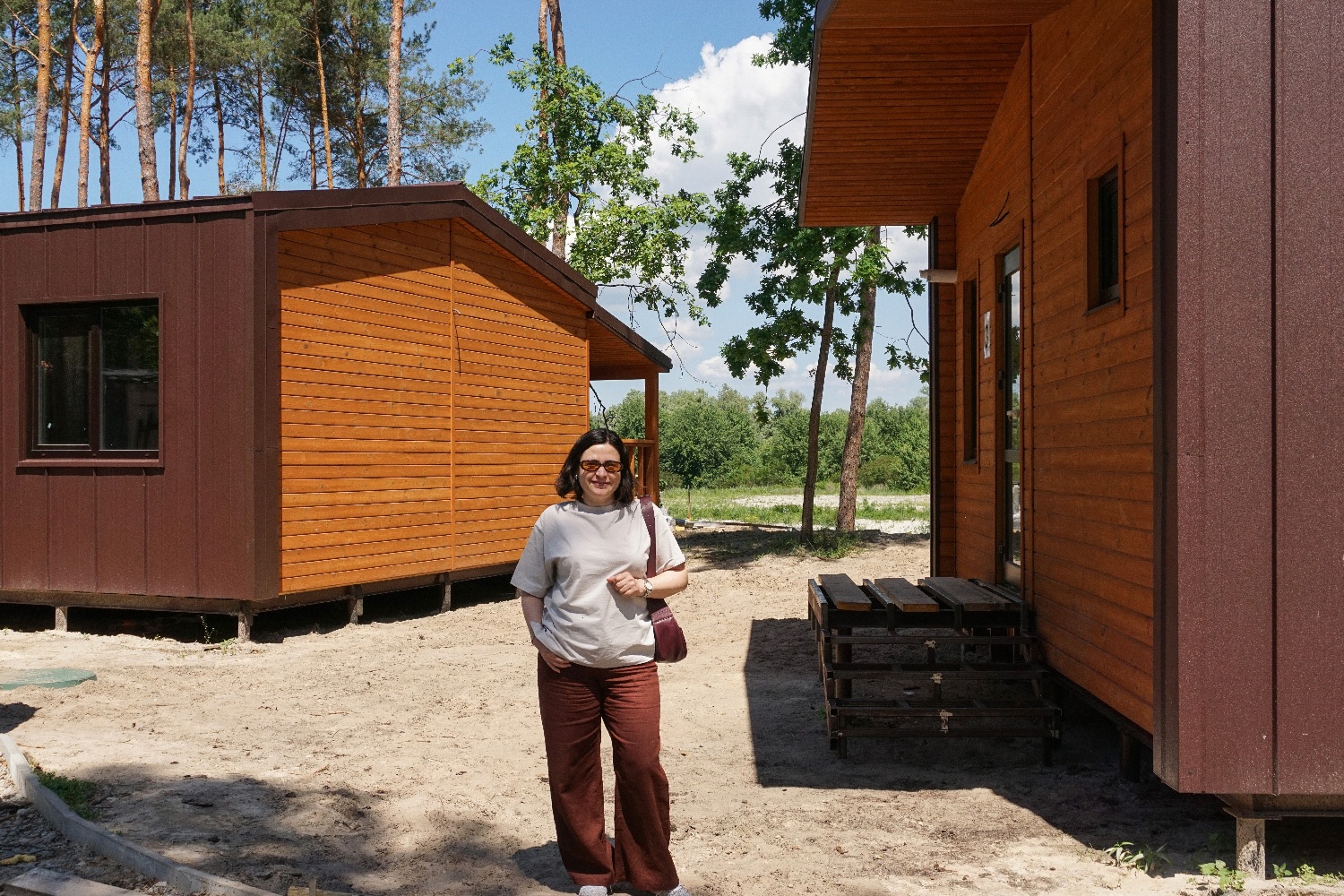
he architecture of the complex functions not as a collection of individual buildings, but as a tool that supports a comfortable fishing-oriented experience. We deliberately avoided excessive recreational infrastructure and focused on what truly matters to guests. The site includes wooden guest houses for small groups, a sauna, a large pavilion for shared gatherings, a service building, and a boat launch ramp.
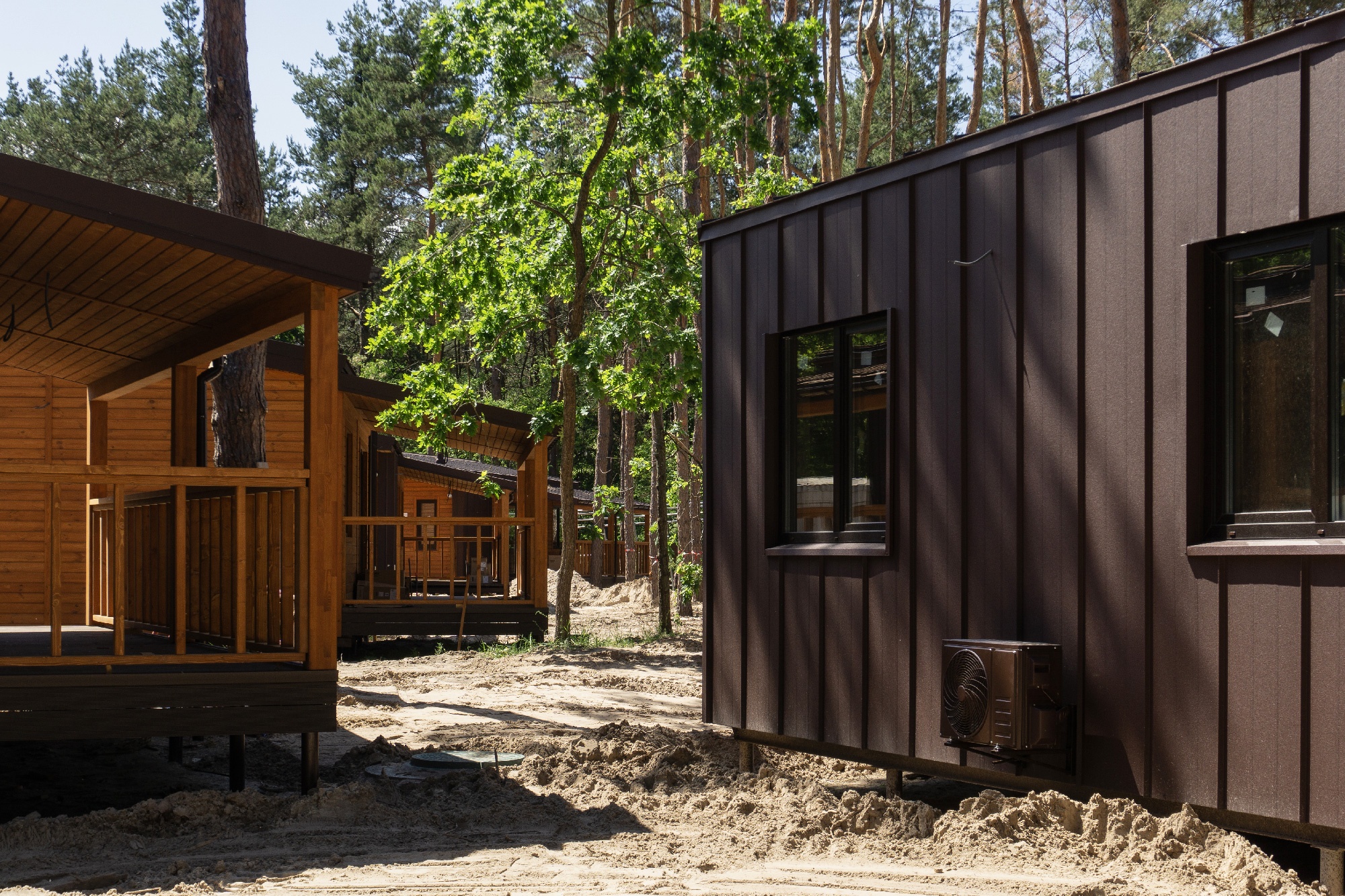
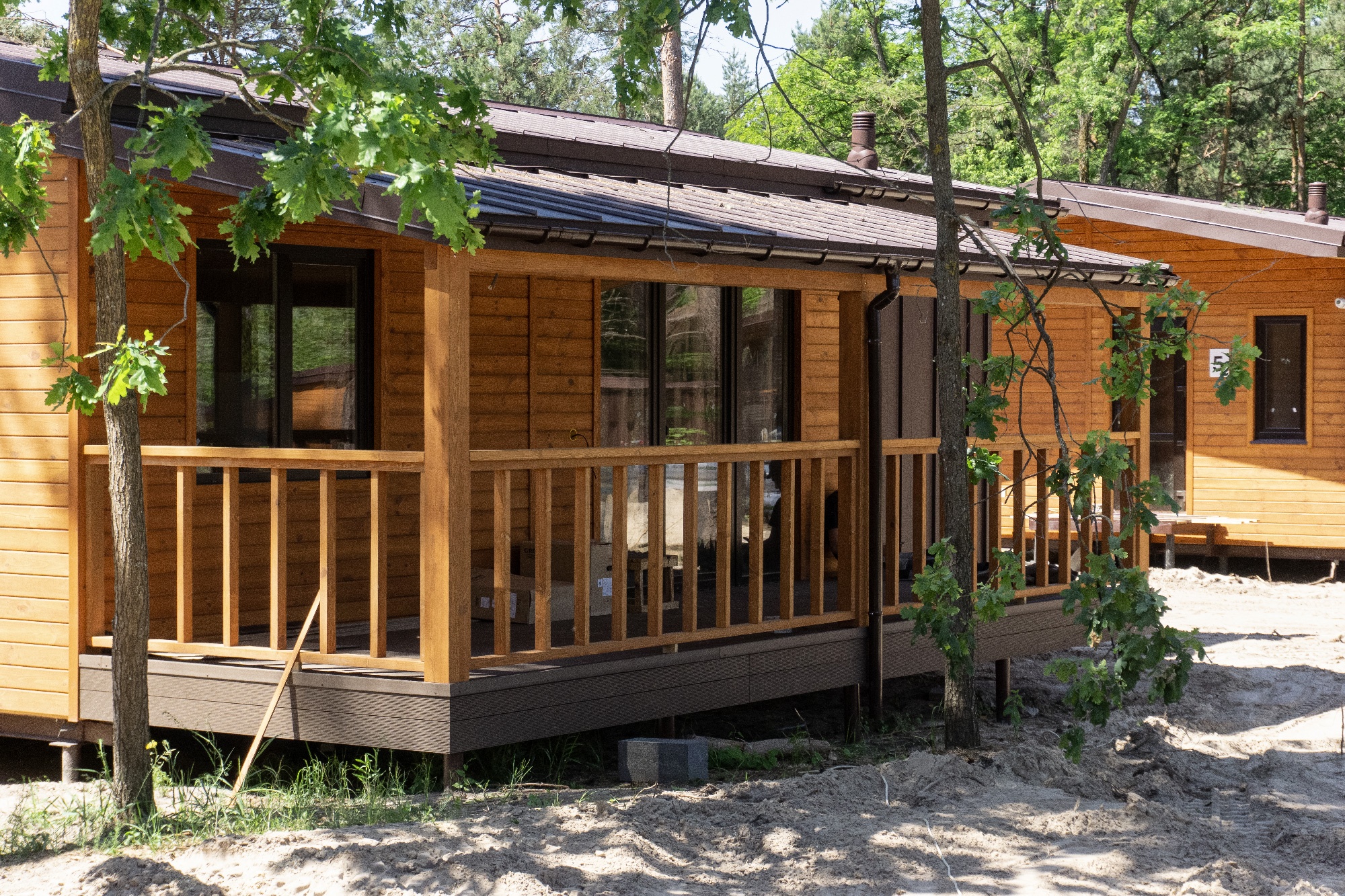
ach house features a spacious terrace overlooking the water, while the overall layout allows guests to enjoy both privacy and shared experiences when traveling in larger groups. The service building accommodates technical and operational functions that ensure the autonomous operation of the complex.
A distinctive aspect of the project was the need to work within an already established environment. The client acquired a property with existing buildings that had their own architectural character and visual identity. Rather than demolishing these structures, the YUGMA team integrated them into a new development concept for the recreational base.
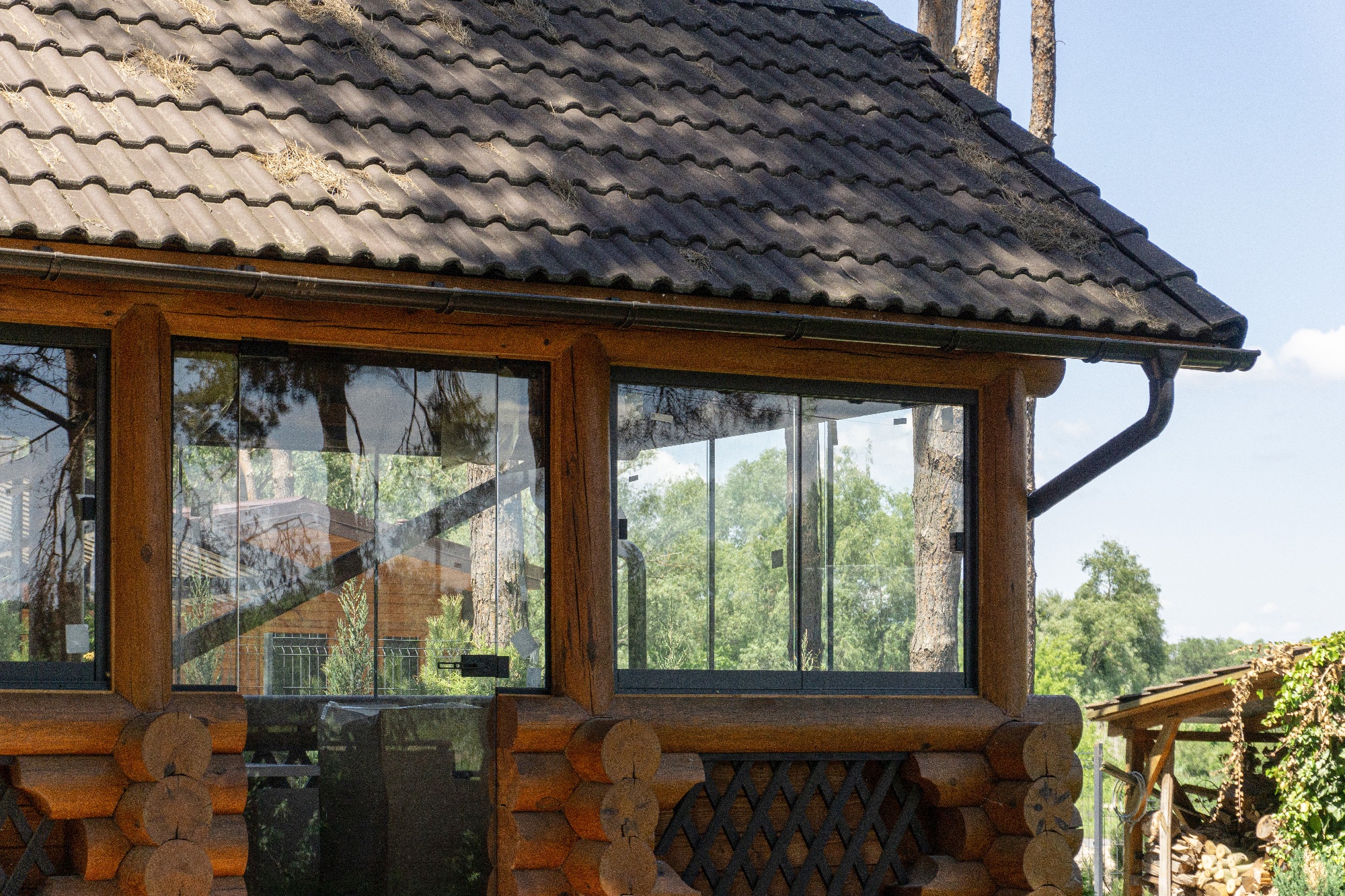
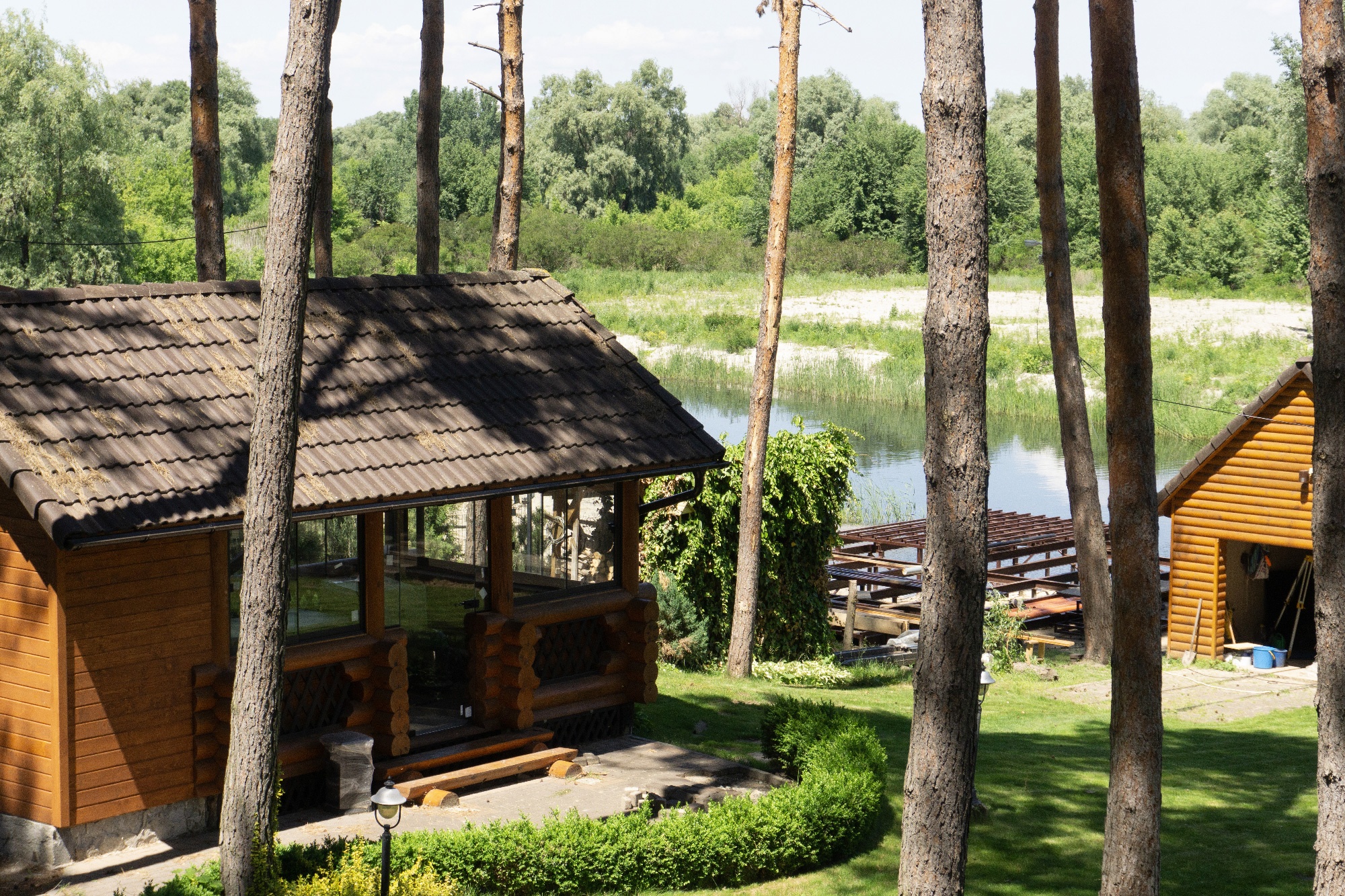
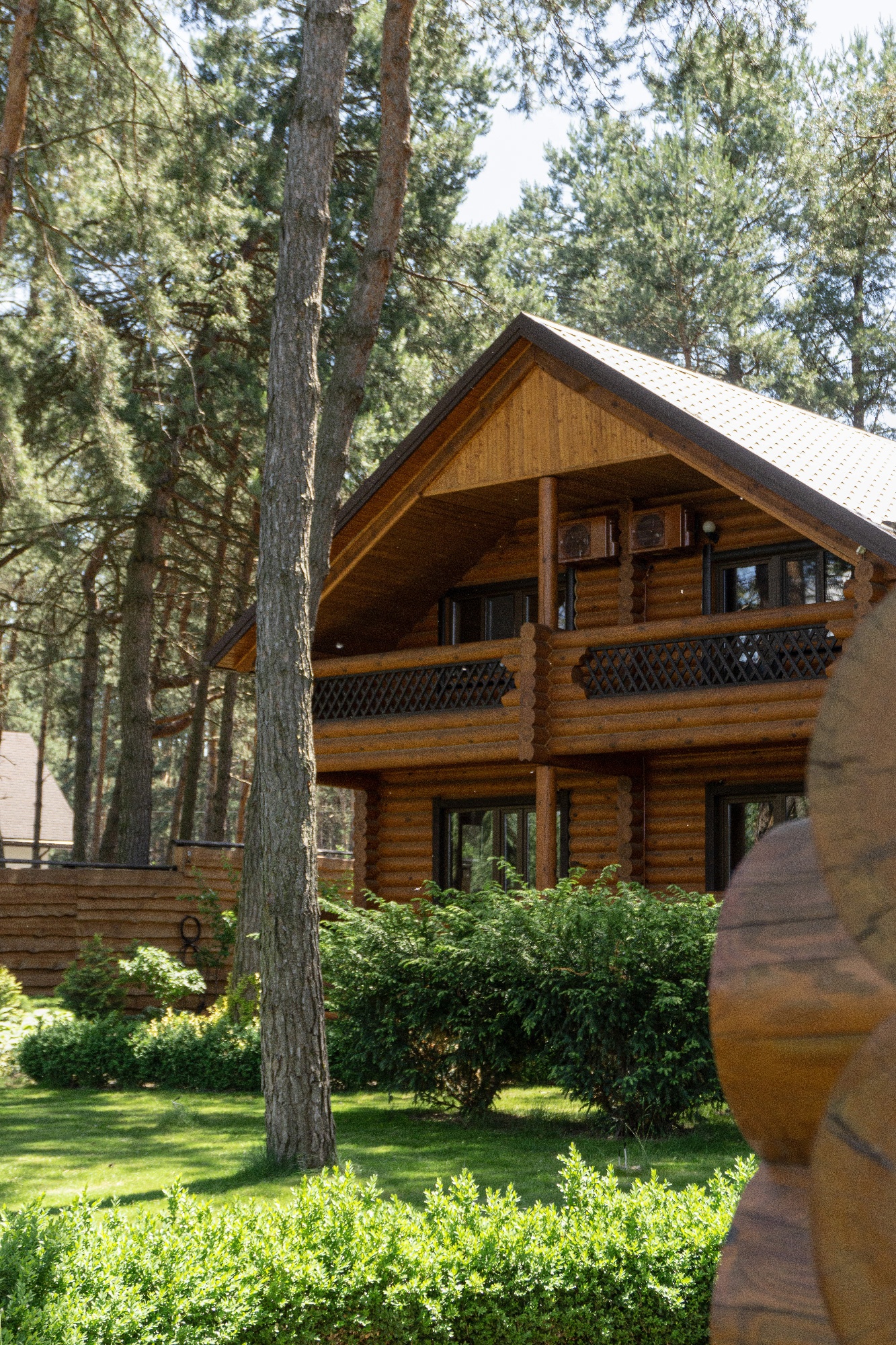
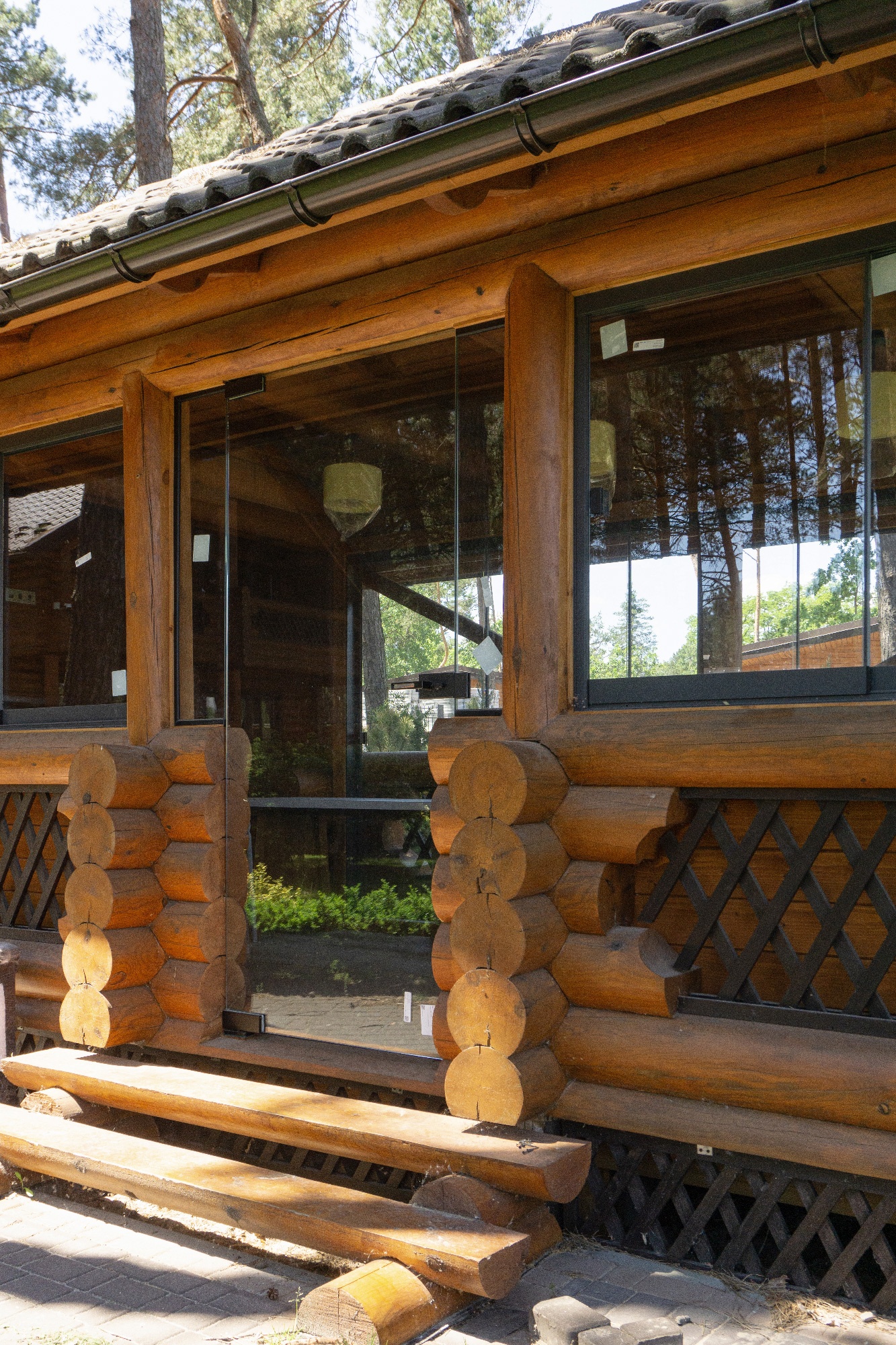
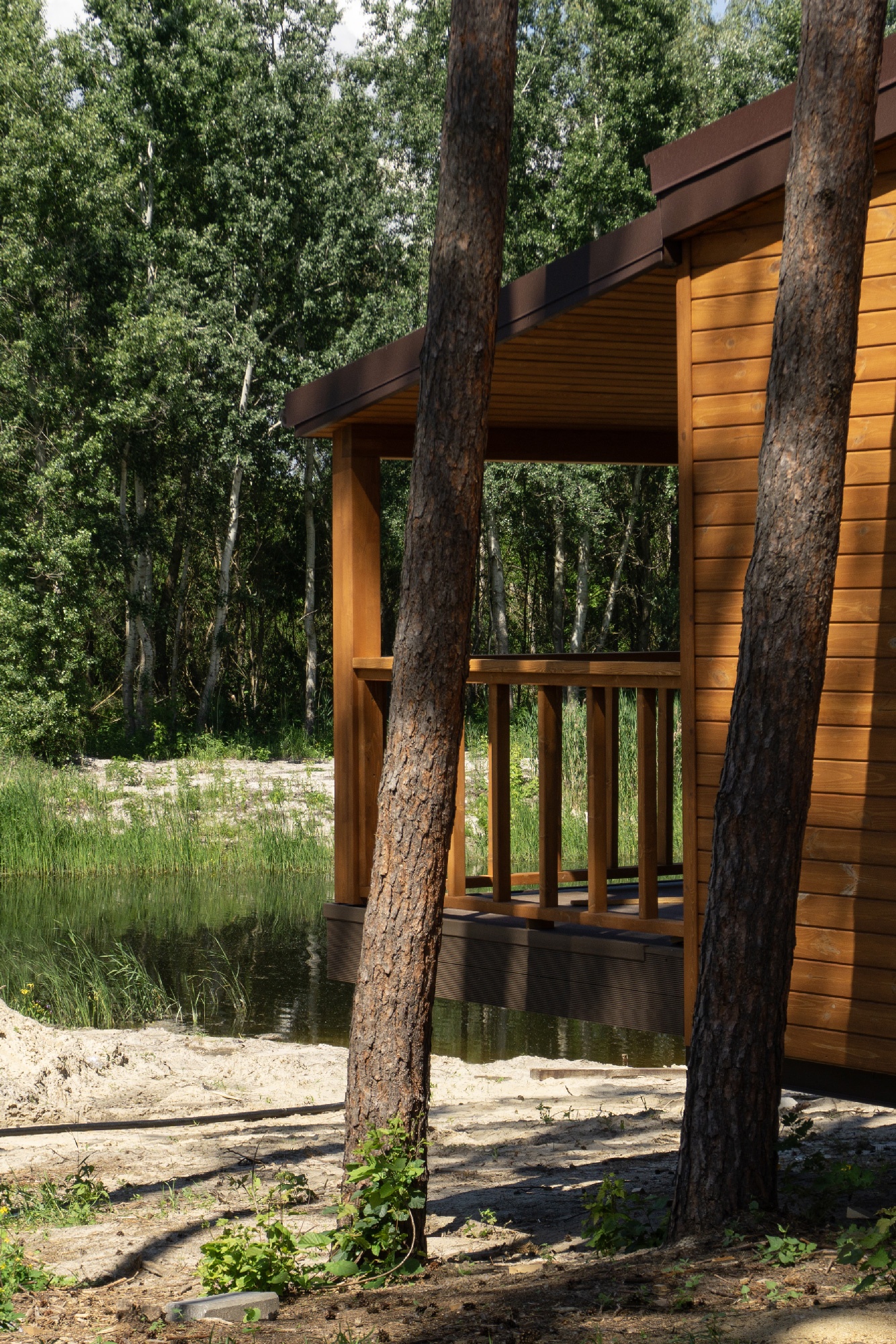
The existing pavilion was preserved and upgraded through glazing, allowing it to be used throughout the year. The administrative building received a renewed architectural appearance, while the new houses and infrastructure were designed in response to the existing development, color palette, and natural surroundings. This approach helped preserve part of the client’s investment, maximize the site’s potential, and create a cohesive visual identity for the entire complex. Throughout the implementation process, most of the existing trees were also preserved and remain an integral part of the atmosphere of the place.
The Khreshchatyk project demonstrates YUGMA’s approach to recreational architecture, where architectural decisions are shaped not around individual buildings, but around the needs of the target audience, the business model of the facility, and the real conditions of the site.